

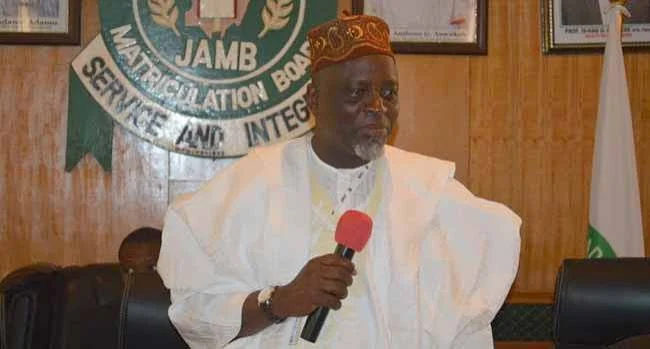
OSAYE, Nigeria — The immediate past Registrar of the Joint Admissions and Matriculation Board (JAMB), Prof. Ishaq Oloyede, has urged universities in Kwara State to serve as the state's "developmental brain box" by offering research-driven solutions to its socio-economic challenges.
Oloyede, who also chairs the Board of Trustees of the Consortium of Universities in Kwara State (KU8+), made this appeal on Friday during the opening of the fourth KU8+ Conference at Summit University, Offa.
The conference convened university administrators, academics, researchers, policymakers, government officials, and industry leaders to enhance collaboration, research, innovation, and societal impact within the higher education sector.
Speaking at the event, Oloyede emphasized that universities should extend their roles beyond teaching and degree conferral. He stressed their active contribution to policymaking and the development of practical solutions for their host communities.
"Universities should be positioned to anticipate emerging challenges and help governments prepare for the future through research, innovation and evidence-based recommendations," Oloyede stated.
He further advised, "They must remain apolitical and play a sanitising role by providing objective advice to governments and helping to formulate policies capable of promoting sustainable development."
Recalling his time as Vice-Chancellor of the University of Ilorin, Oloyede shared an instance where he declined an election presiding officer role, underscoring his belief in university neutrality.
He maintained that universities must stay neutral to act as credible mediators during disagreements among political actors.
Oloyede also challenged KU8+ institutions to utilize their combined expertise and Kwara State's concentration of agricultural research bodies to transform the state's agricultural sector.
He noted the presence of several federal institutions in the state with mandates relevant to agriculture and rural development, including the Agricultural and Rural Management Training Institute and the Nigerian Stored Products Research Institute.
"Agriculture is one of Kwara’s major economic strengths. I want to urge the universities in the state to establish stronger partnerships with the institutions and develop innovative solutions capable of improving agricultural productivity, food security and economic growth," he urged.
Additionally, Oloyede called on the universities to apply research and innovation to revitalize some of the state's defunct industries.
He cited the Bacita Sugar Company, Jebba Paper Mill, and the Tobacco Company as examples of major industries whose closures have negatively impacted the state's industrial and economic landscape.
"I urge the universities to research new opportunities around such industries and explore ways of reinventing Kwara’s economy," Oloyede remarked.
He added, "Universities should not merely react to problems after they emerged but should generate ideas and solutions that would enable governments and communities to prepare adequately for future challenges."
Oloyede commended the Vice-Chancellor of the University of Ilorin and Chairman of KU8+, Prof. Wahab Egbewole, SAN, for initiating the consortium. However, he clarified that he was not the founder of KU8+, contrary to some reports.
He explained that while the University of Ilorin had pioneered collaborative initiatives like AWAU and U6+ during his tenure, KU8+ was conceived under Egbewole's administration.
The Olofa of Offa, Oba Mufutau Gbadamosi Esuwoye II, congratulated the organizers, describing KU8+ as a commendable initiative capable of redefining collaboration among Kwara universities.
The monarch highlighted that the gathering of university leaders demonstrated the power of collective efforts over individual pursuits and expressed optimism that the consortium's shared programs would help Kwara State produce top students.
The Vice-Chancellor of Summit University, Offa, Prof. Abiodun Aibinu, welcomed participants and expressed gratitude for the institution being chosen to host the 2026 conference. He reiterated the university's dedication to research, innovation, academic excellence, and partnerships aimed at solving national and global challenges.
Prof. Egbewole, the KU8+ Chairman, described the consortium as a strategic alliance designed to reposition higher education through collective action and knowledge sharing, noting that universities can no longer afford to operate in isolation to effectively address societal needs.
Commodore Ogbeche Ochagu, Commandant of the Navy College of Health Sciences, Offa, and Chairman of the occasion, praised KU8+ for fostering inter-university partnerships and urged sustained initiatives that translate education and research into practical solutions for Nigeria's developmental issues.
In his keynote address, Emeritus Professor Peter A. Okebukola, former Executive Secretary of the National Universities Commission, challenged African universities to move beyond consuming artificial intelligence (AI) technologies and start creating solutions for the continent's specific needs.
Okebukola suggested that the KU8+ Consortium establish an AI hub to unite scholars and experts in developing AI tools for various fields, potentially strengthening research and positioning the consortium as a leader in AI development in Nigeria and Africa.
Meanwhile, Emeritus Professor of Science Education, Olugbemiro Jegede, urged KU8+ members to deepen academic collaboration by implementing a credit transfer system for seamless student movement among member institutions.

Comments (0)
No comments yet. Be the first to share your thoughts!
Leave a Comment