
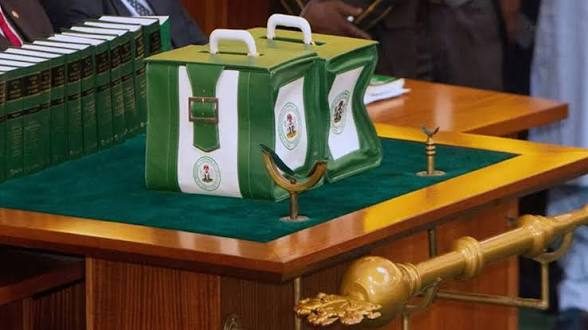
ABUJA, Nigeria — Fresh controversy has erupted over the 2026 Appropriation Act following revelations that over ₦30 billion has been allocated for the construction, renovation, and equipping of royal palaces and places of worship across the country.
The review, published by public accountability organization Tracka (an initiative of the BudgIT Foundation), comes at a time when Nigeria is grappling with severe economic hardship and a widening ₦31.45 trillion budget deficit.
According to Tracka’s breakdown, the Federal Government set aside ₦22.15 billion in the 2026 budget for 106 royal palace projects across various states.
Public policy experts have raised serious questions regarding the institutional mandates and transparency of these allocations:
- Untraceable Locations: 11 palace projects valued at ₦5.85 billion have no identified physical locations, making public monitoring virtually impossible.
- Misaligned MDAs: None of the 45 Ministries, Departments, and Agencies (MDAs) assigned to execute these projects possess the statutory mandate to construct or renovate traditional palaces.
- Agency Domicile: Projects were embedded in unrelated agencies, including the Nigeria Stored Products Research Institute, National Cereals Research Institute, and the Federal Cooperative College, Oji River.
Critics argue that under the 1999 Constitution, traditional institutions fall under the domain of state and local governments rather than federal capital expenditure.
Tracka also highlighted ₦8.05 billion earmarked for faith-based infrastructure across the nation:
- Mosque Projects: ₦6.14 billion allocated to 52 mosque projects.
- Church Projects: ₦1.91 billion assigned to 7 church-related projects.
A major focal point of public debate involves a controversial allocation in the Bende Federal Constituency of Abia State, where funds were provided for church musical instruments and evangelical equipment.
Defending the provision, the Office of the Deputy Speaker of the House of Representatives, Rt. Hon. Benjamin Kalu, stated that the net allocation of ₦780 million (after tax deductions) is structured as a youth re-orientation program:
"Nation-building must go beyond roads and physical infrastructure. Government must also invest in building the character and value system of the people using various value delivery platforms," said Livinus Nwabughiogu, spokesperson to the Deputy Speaker, adding that faith-based platforms will use the equipment to drive campaigns against drug abuse and violent crime.
However, financial analyst Kalu Aja and civil society groups countered that public funds during a fiscal deficit should be prioritized for schools, primary healthcare centers, and rural electrification.
The budget debate comes as lawmakers express growing frustration over delays in executing capital projects despite reports of improved federal revenue generation.
Senate Chief Whip Tahir Monguno cautioned that failure to implement duly passed Appropriation Acts constitutes a constitutional breach, warning executive agencies against withholding approved capital releases to MDAs.
Comments (1)
Leave a Comment