
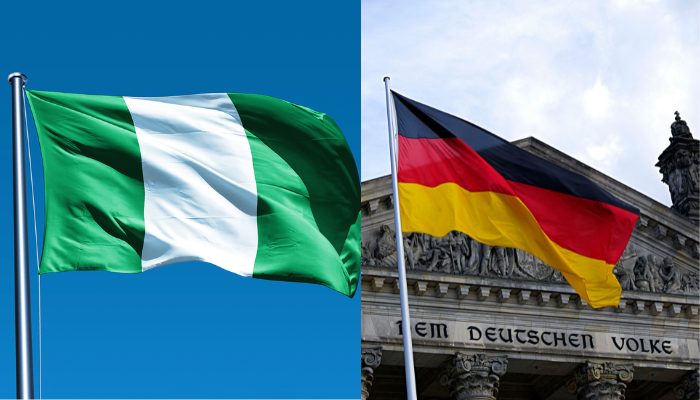
ABUJA, Nigeria — The Federal Government of Nigeria has made a strategic pitch to German investors, urging deeper private-sector participation in renewable energy, digital technology, artificial intelligence, and critical minerals.
The appeal was made in Abuja during a bilateral meeting between Nigeria’s Minister of Foreign Affairs, Ambassador Bianca Odumegwu-Ojukwu, and her German counterpart, Federal Minister for Foreign Affairs, Johann Wadephul.
The high-level meeting aimed to expand trade, infrastructure investment, security cooperation, and vocational skills development between both nations.
Highlighting President Bola Ahmed Tinubu’s ongoing economic reform agenda, Odumegwu-Ojukwu emphasized that economic diplomacy remains a central pillar of Nigeria's foreign policy.
She identified several high-growth sectors ripe for German capital and expertise:
- Energy Transition: Renewable energy projects, green economy initiatives, and power grid modernization.
- Technology & Innovation: Digital technology, artificial intelligence, and knowledge-economy infrastructure.
- Industrial & Natural Resources: Critical minerals, manufacturing, healthcare, and transport infrastructure.
- Skills Development: Leveraging Germany's world-renowned technical and vocational education frameworks to empower Nigerian youths.
"The partnership has become even more important at a time when the world faces economic uncertainty, energy demands, and climate change," Odumegwu-Ojukwu stated. "We encourage greater participation by German businesses in Nigeria's priority sectors to build a sustainable, future-ready economy."
In his response, German Foreign Minister Johann Wadephul reaffirmed Berlin’s commitment to strengthening ties with Abuja, noting that Germany opened its embassy in Lagos just three days after Nigeria gained independence in 1960.
Wadephul disclosed that bilateral trade between Nigeria and Germany grew by 10% over the past year, cementing Nigeria's position as Germany’s largest trading partner in Sub-Saharan Africa.
"The Nigeria-Germany Business Forum will continue to deepen trade between our countries," Wadephul said, adding that he expects a new wave of German investors to enter the Nigerian market following the bilateral talks.
Both foreign ministers also agreed to enhance joint efforts through the Nigeria-Germany Bi-National Commission to address regional security, conflict prevention, and economic stabilization across West Africa.
Comments (0)
No comments yet. Be the first to share your thoughts!
Leave a Comment