

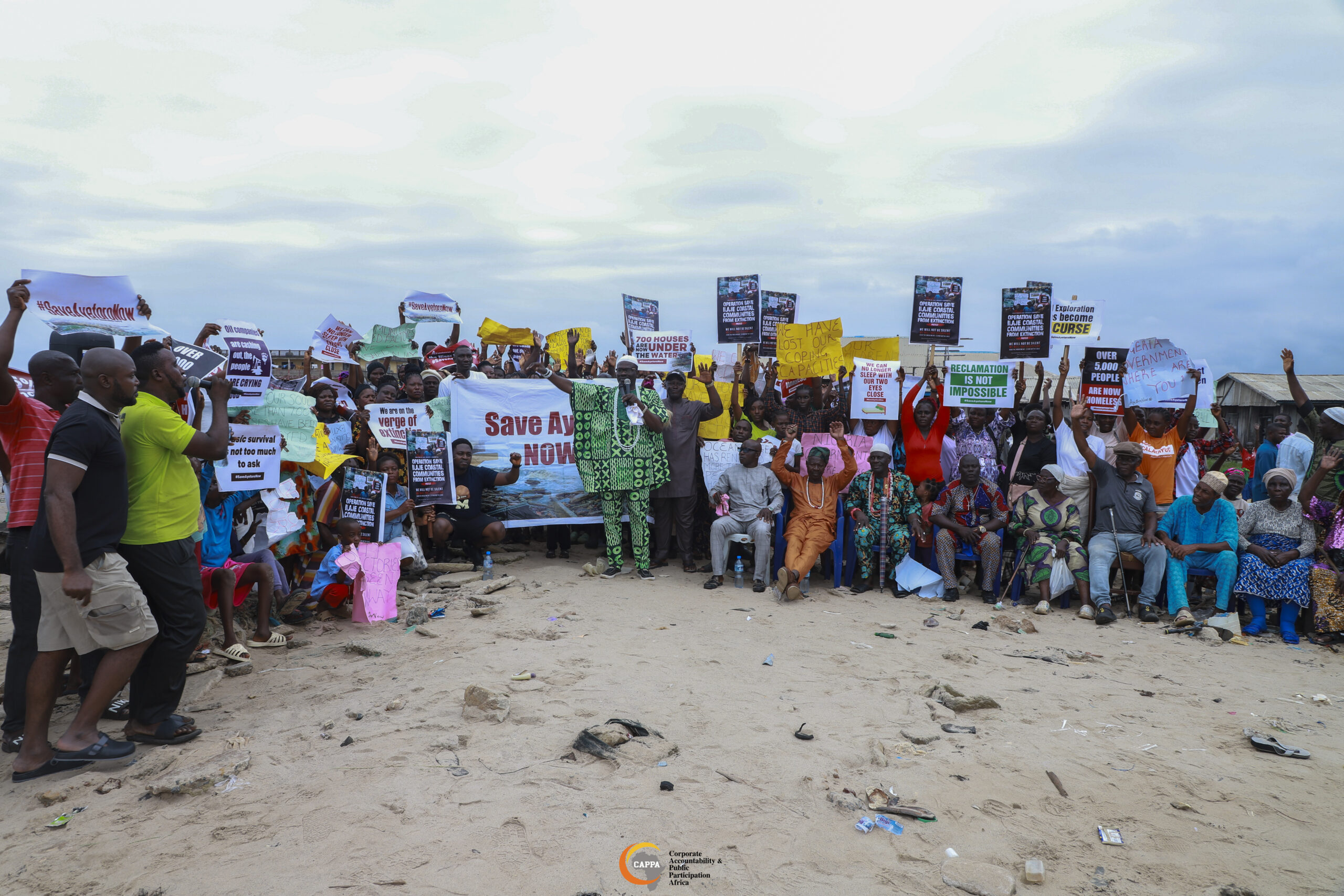
ILAJЕ, Nigeria — Twenty coastal communities in Ilaje Local Government Area, Ondo State, have issued a stark warning: boycott the 2027 general elections if the Federal and Ondo State governments fail to address the escalating ocean surge threatening their existence.
The communities, speaking through the Coalition of Ilaje Ravaged Communities, stated that the advancing Atlantic Ocean has already submerged significant portions of their settlements. They are demanding immediate government intervention, including the construction of sea walls, groynes, and other shoreline protection measures to combat the worsening environmental and humanitarian crisis.
A press conference held last Wednesday in Ayetoro, the most severely affected community, was followed by a protest in Igbokoda the next day. The residents expressed frustration over years of unheeded appeals and government inaction.
The affected communities include Ayetoro, Awoye, Mese, Gbagira, Jiringho, Ilowo, Ilepete, Idiogba, Oroto, Alagbon, Erunona, Olotu, Yaye, Womitenren, Ogboti, Lepe, Ehinmore, Abetobo, Odun-Oyinbo, and Abereke. They described their situation as a humanitarian emergency, with hundreds of homes, schools, places of worship, health facilities, fishing grounds, and factories destroyed by the encroaching sea.
Ayetoro, once a thriving settlement, has lost an estimated 85 percent of its landmass to coastal erosion and ocean surge, becoming a symbol of the devastation. Other communities are now facing a similar fate as the shoreline continues to recede.
The coalition urged the Federal Government to declare the Ilaje coastline a national disaster zone and release emergency intervention funds. They also called on the state government to sign a memorandum of understanding and publish a 90-day action plan within 30 days of receiving their demands.
“No project, no vote,” the coalition declared, signaling a shift in their engagement with political parties and aspirants. They emphasized that the proposed election boycott is not a rejection of democracy but a demand for accountability from politicians seeking their votes.
The communities highlighted their significant contribution to Ondo State's oil production, lamenting the inadequate protection they have received against the environmental consequences of living along the coast. “You cannot take 75 per cent of our resources and give us zero per cent protection,” they stated.
Oba Olorumbe Ojagbohunmi, the monarch of Ayetoro, lamented the scale of destruction and what he described as prolonged government neglect. He noted that oil extraction continues from areas that were once part of his community's land, while the sea encroaches at an alarming rate.
“For 10 years now, we have been losing at least 50 buildings every year to the ocean surge. My people have become refugees in their own town,” Oba Ojagbohunmi said. He recounted an incident in April where the destruction of the road to his palace trapped him and his family for a week.
The monarch blamed the severity of the problem on government failure, citing two multibillion-naira shoreline protection contracts awarded by the federal government that were reportedly never executed.
Ogunlade Olamide, Associate Director at Corporate Accountability and Public Participation Africa (CAPPA), echoed the demand for climate and environmental justice. He stressed the duty of all government levels to intervene urgently to protect the Ilaje people, their homes, livelihoods, and heritage.
“Communities that have borne the environmental and social costs of reckless resource extraction cannot continue to be met with silence and inaction. Their call is not for charity, but a demand for justice, fairness, accountability and reparation,” Olamide stated.
Comrade Akingboye Thompson, the coalition’s General Coordinator, described the crisis as an existential threat, with the Atlantic Ocean swallowing land and poor drainage systems causing internal flooding. He referred to the displaced residents as “climate refugees in their own country.”
The coalition also drew attention to the recurring flooding in Igbokoda, the local government headquarters, due to inadequate drainage. They called for the immediate construction of a modern drainage network to prevent the town from being submerged during the rainy season.
The communities urged all levels of government to treat the situation as an emergency and commence immediate intervention, rather than waiting for more communities to disappear.


Comments (0)
No comments yet. Be the first to share your thoughts!
Leave a Comment